Overview & Clinical Background
Dystonia is a neurological movement disorder characterized by sustained or intermittent involuntary muscle contractions causing abnormal, often repetitive twisting movements, posturing, or tremors. Dystonia can be focal (affecting one body area like the neck or eyes), segmental, or generalized. It is often accompanied by a "sensory trick" (geste antagoniste) where touching the chin or face temporarily alleviates the spasm.
Signs & Symptoms to Watch For
Recognizing early warning signs prevents irreversible nerve or brain damage.
Root Causes & Underlying Mechanisms
- Basal ganglia sensorimotor circuit dysfunction and impaired intracortical inhibition
- Primary genetic dystonias (DYT1, DYT6, and dopamine-responsive dystonia / Segawa syndrome)
- Secondary dystonias: Perinatal hypoxia (cerebral palsy), stroke, focal trauma, or Wilson's disease
- Drug-induced Tardive Dystonia resulting from long-term antipsychotic or antiemetic medications
Diagnostic Evaluation & Testing Protocol
Tests and investigations Dr. Chhatrapal uses to confirm the diagnosis.
Detailed Neurological Phenotyping: Documenting dystonic posturing, sensory tricks, and task specificity
3T Brain MRI: Ruling out secondary structural lesions in the putamen, globus pallidus, and thalamus
Metabolic & Genetic Workup: Serum ceruloplasmin and slit-lamp eye examination for Kayser-Fleischer rings (Wilson's disease), DYT gene panel
Trial of Low-Dose Levodopa: Rule out Dopamine-Responsive Dystonia (DRD)
Treatment Details & Procedures
Every patient at our practice receives a customized treatment roadmap designed under the clinical guidance of Dr. Chhatrapal Singh Sahu. Below are the key treatment modalities and procedural therapies utilized:
Botulinum Neurotoxin Chemodenervation
The premier treatment for focal dystonias (cervical dystonia, blepharospasm). Dr. Sahu injects tiny doses into the specific overactive hypertonic muscle groups (sternocleidomastoid, splenius capitis, trapezius) to break the sustained contraction.
Systemic Pharmacotherapy
Anticholinergic agents (Trihexyphenidyl), GABA agonists (Baclofen), Clonazepam, and trial of Levodopa to dampen basal ganglia hyperactivity.
Specialized Neuro-Physiotherapy & Sensory Retraining
Postural alignment retraining, passive stretching, and task-specific ergonomic modifications to manage writer's cramp.
Deep Brain Stimulation (DBS) Surgical Candidacy
Evaluation and referral for Globus Pallidus Internus (GPi) DBS for severe, medically refractory generalized or cervical dystonia.
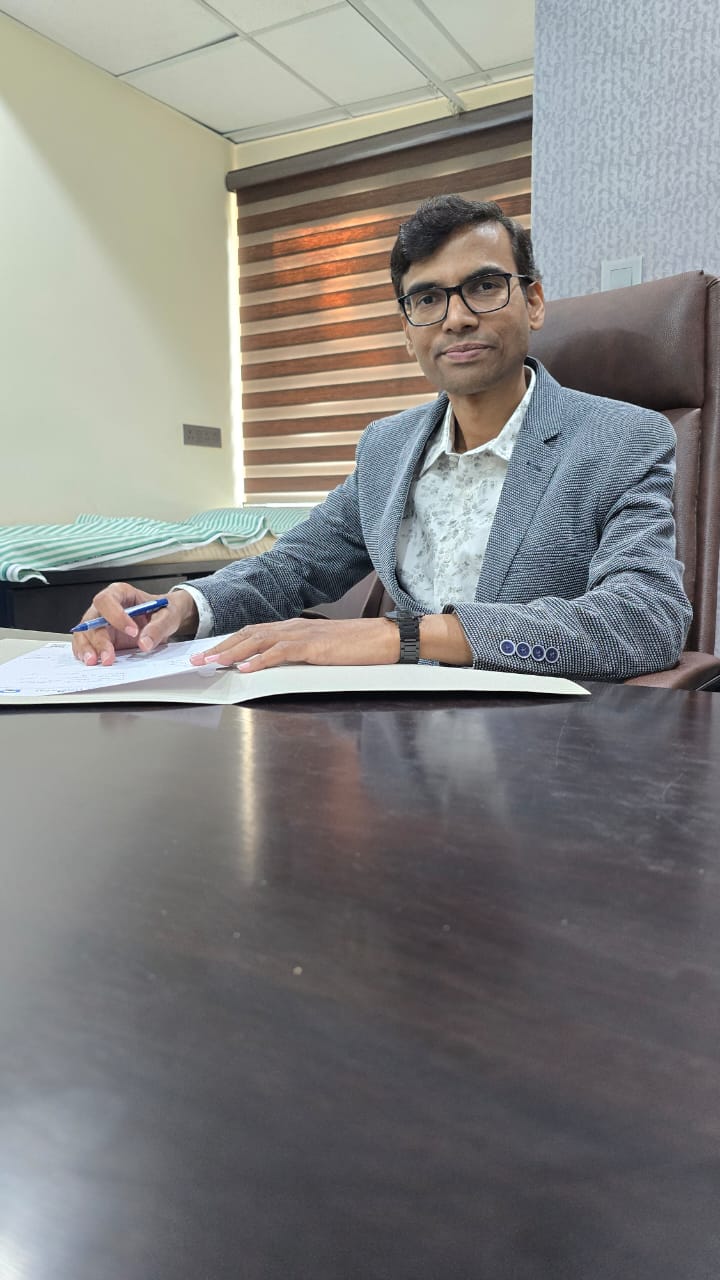
Dr. Chhatrapal Singh Sahu's Approach
MBBS, MD - Medicine, DM - Neurology • Consultant Neurologist
Dr. Chhatrapal Singh Sahu carefully maps individual muscle activation patterns to ensure targeted relief, restoring head alignment, opening closed eyelids, and relieving muscle pain.
Frequently Asked Patient Questions
Clarifying common concerns regarding diagnosis, treatment safety, and recovery.